Europe Is Waking Up: A Continent Facing a New Era of Change
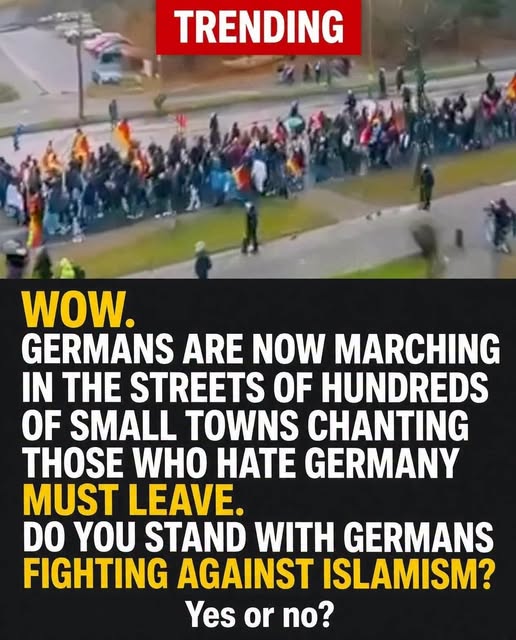
Europe is waking up.
Across the continent, people are increasingly engaged in debates about the future of their countries, their economies, their borders, their security and their place in a rapidly changing world. Political conversations that once seemed limited to specialists or government institutions are now appearing everywhere, from national elections and parliamentary debates to social media feeds and conversations around dinner tables.
The phrase “Europe is waking up” has become popular because it captures a sense that something is changing. Exactly what that change means, however, depends heavily on the country, the political movement and the individual being asked.
Europe is not one single political community with one opinion. It is a continent made up of dozens of countries, cultures and political traditions. Citizens in different nations can have very different views about immigration, economic policy, national sovereignty, energy, defense and the European Union.
Yet several major issues are increasingly shaping public discussion across borders.
One of the biggest is immigration.
European countries have experienced significant migration over the past decade, including refugees fleeing wars and persecution as well as people seeking employment and better economic opportunities. The arrival of large numbers of migrants has produced both humanitarian responses and political disagreements.
Some Europeans emphasize the responsibility to protect refugees and provide humanitarian assistance. Others focus on border controls, integration, housing pressures and the capacity of governments to manage immigration effectively.
These competing concerns have contributed to political changes in several European countries.
Another major issue is the economy.
European households have faced periods of inflation, rising living costs and concerns about energy prices. Housing affordability has also become an important issue in many cities. Younger generations in particular have questioned whether traditional economic arrangements will provide them with the same opportunities previous generations enjoyed.
Economic frustration can influence politics because people often judge governments through everyday experiences: the price of food, rent, electricity, transportation and healthcare.
At the same time, Europe is confronting a changing global security environment.
Russia’s war against Ukraine has fundamentally altered European discussions about defense and national security. Governments across the continent have reconsidered military spending, ammunition production, energy dependence and the importance of alliances.
Countries that traditionally relied heavily on diplomatic and economic relationships have increasingly discussed the need for stronger defensive capabilities.
The war has also affected Europe’s relationship with energy.
For decades, several European economies depended significantly on imported Russian energy. The invasion of Ukraine accelerated efforts to diversify energy supplies and expand alternative sources.
That transition has created opportunities and challenges.
Renewable energy is expanding across Europe, but building new infrastructure takes time. Governments must balance climate goals with affordability, energy security and industrial competitiveness.
Climate policy itself remains another major political issue.
European institutions have pursued ambitious environmental targets, including efforts to reduce greenhouse-gas emissions and transition toward cleaner energy. Supporters argue that these policies are necessary to address climate change and modernize European economies.
Critics have raised concerns about costs, regulation and the effect of rapid changes on farmers, manufacturers and households.
These disagreements demonstrate that Europe is not simply “waking up” in one direction.
Instead, Europeans are debating what kind of future they want.
The European Union is another central part of that discussion.
Supporters of deeper European cooperation argue that countries can achieve more collectively in areas such as trade, security, technology and international diplomacy. Critics sometimes argue that national governments should have greater authority over decisions affecting their citizens.
The debate between European integration and national sovereignty has existed for decades, but recent economic, security and migration challenges have given it renewed attention.
Political parties that once occupied the margins of national politics have gained greater visibility in several countries. Mainstream parties have also adjusted their positions in response to changing voter concerns.
This does not mean that all Europeans share the same political direction.
In some countries, voters have supported parties calling for stronger immigration restrictions and greater national sovereignty. In others, voters have supported parties emphasizing European integration, environmental policy or expanded social programs.
Election results therefore vary significantly from one country to another.
Social media has also changed the way Europeans participate in political discussions.
A political speech that once reached a relatively limited audience can now be viewed by millions. A photograph, video or statement can cross national borders within minutes.
This has increased political engagement, but it has also created new challenges.
False or misleading information can spread quickly online. Short videos may remove statements from their original context, while emotionally charged headlines can encourage people to react before checking the underlying facts.
As Europe becomes more politically active, media literacy becomes increasingly important.
Citizens need reliable information to understand complicated issues. Immigration statistics, economic figures, energy prices, defense spending and election results can all be misunderstood when presented without context.
The idea of Europe “waking up” can therefore mean different things to different people.
For some, it means ordinary citizens becoming more interested in politics.
For others, it means governments becoming more serious about national security.
Some may use the phrase to describe changing attitudes toward immigration, while others may use it to describe Europe’s growing awareness of economic competition from the United States, China and other regions.
Technology is another factor driving change.
Artificial intelligence, automation and digital industries are transforming economies around the world. European governments are trying to determine how to encourage technological innovation while protecting workers, privacy and consumers.
The continent faces a difficult balancing act.
Europe wants to remain competitive in advanced industries while maintaining social protections and environmental standards. Achieving both goals will require investment, innovation and difficult political decisions.
Demographic change is another long-term challenge.
Many European countries have aging populations and relatively low birth rates. This creates pressure on pension systems, healthcare services and labor markets.
Governments are debating how to respond through immigration, family policies, retirement reforms, productivity improvements and technological innovation.
None of these issues has a simple solution.
That is perhaps the most important point behind the growing political conversation across Europe.
The continent is not experiencing one single awakening. It is experiencing many debates at the same time.
Citizens are questioning established assumptions about borders, energy, defense, economics, technology and national identity. Political parties are responding in different ways, and voters are making different choices depending on their national circumstances.
The coming years could therefore be important for Europe.
The decisions made today may influence the continent’s economy, security and political institutions for decades.
But whatever direction individual countries ultimately take, one thing is clear: European politics is receiving enormous public attention.
People are paying closer attention to elections. Governments are being challenged more intensely. Political movements are finding new audiences. And social media is ensuring that national debates quickly become international conversations.
“Europe is waking up” may be a dramatic phrase, but it reflects a genuine reality: millions of Europeans are actively debating what comes next.
The future will not be determined by one politician, one party or one election.
It will be shaped by millions of individual decisions, public debates and policy choices across a continent undergoing significant economic, demographic, technological and geopolitical change.
For Europe, the question is no longer simply whether change is coming.
The bigger question is what Europeans will choose to do with it.