The Survivor Who Refused to Surrender Her Freedom
Stories of women escaping extremist captivity are among the most painful accounts to emerge from conflicts involving jihadist organizations. They reveal not only the physical danger faced by civilians, but also the devastating reality of forced marriage, sexual violence, religious coercion, and psychological abuse.
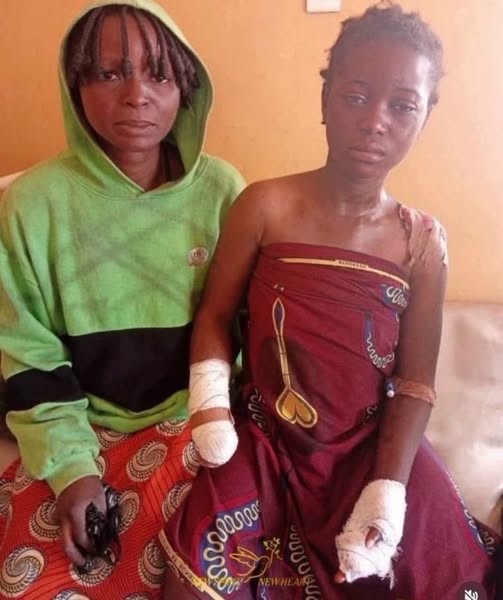
A dramatic story circulating online claims that a Christian girl was attacked after refusing to marry a jihadist and become his sex slave. The story says her hands were cut off and that she escaped before the attacker could behead her. While the specific account has not been independently verified, researchers have documented real cases involving remarkably similar forms of abuse against women and girls held by extremist groups.
One important distinction matters: the crimes committed by extremist organizations should not be presented as representative of Muslims generally. The documented abuses discussed in these reports were carried out by militant groups such as Boko Haram and the Islamic State, organizations whose actions have been condemned by people from many religious backgrounds.
Research into Boko Haram captivity in northeastern Nigeria has recorded survivor testimonies describing forced marriages, sexual slavery, beatings, torture, forced religious conversion, and threats against women who refused to cooperate with their captors. Some survivors reported being forced to marry fighters after refusing their demands.
For victims, refusing a forced marriage could become a life-threatening decision.
One survivor interviewed in an academic study described being pressured to convert and marry a fighter. When she resisted, she was physically assaulted and threatened. Other survivors described women being beaten, imprisoned, sexually assaulted, or threatened with death because they rejected forced marriage or conversion.
These testimonies demonstrate how extremist captivity can destroy the normal meaning of words such as marriage, family, and faith. A marriage entered under violence is not a free choice. A conversion demanded under threat is not a voluntary expression of religious belief. And sexual contact obtained through captivity or coercion is abuse.
The experiences of women captured by the Islamic State have also been extensively documented. During the group’s campaign in Iraq and Syria, thousands of women and girls from minority communities were abducted. United Nations reporting documented the enslavement and sexual abuse of women and girls, particularly members of the Yazidi community, while other reports described forced marriages and religious coercion.
Some survivors later described being locked inside buildings, transferred between captors, forced to convert, and threatened when they resisted. Their stories showed that captivity was not simply about physical confinement. It was also an attempt to take away a person’s identity, family connections, religious beliefs, and ability to make decisions about her own life.
For survivors, escape is therefore only the beginning.
A woman who manages to flee captivity may still carry physical injuries, psychological trauma, separation from relatives, and memories that remain painful for years. Some survivors have returned to communities where they must rebuild relationships and find ways to support children born during captivity.
The psychological consequences can be particularly severe. Research involving former Boko Haram captives has described long-term trauma associated with sexual violence, forced marriage, torture, isolation, and displacement. Survivors have reported living with memories of violence and uncertainty over the fate of relatives who disappeared during attacks.
Yet their stories also contain another theme: resistance.
For some women, resistance consisted of refusing to abandon their beliefs. For others, it meant protecting their children, refusing an imposed marriage, attempting to escape, or helping another captive survive. Even small acts of defiance could become extraordinarily dangerous under conditions of captivity.
That is why stories of survivors deserve careful treatment.
Sensationalized versions of traumatic events can spread quickly online, especially when photographs or dramatic headlines are attached to them. But when the details of a particular story cannot be confirmed, repeating them as established fact can unintentionally obscure the real victims whose experiences are already documented.
The verified record is horrifying enough.
Academic research has recorded survivors describing women being forced into marriages without consent, sexually assaulted, beaten, tortured, and pressured to convert. Some women were threatened with further violence when they rejected their captors’ demands.
Those accounts do not need fictional additions to demonstrate the seriousness of extremist violence.
They also remind readers why religious identity should be discussed carefully. Boko Haram and Islamic State militants have used religious language to justify violence, but their crimes cannot reasonably be attributed to every Muslim person. Millions of Muslims around the world reject extremist violence, just as members of other religions reject violent movements that claim to act in their name.
The focus should remain on the perpetrators and their victims.
For a woman who has survived captivity, freedom means more than physically leaving a dangerous location. It means recovering the right to make choices about her own future. It means being reunited with family when possible, receiving medical care, finding psychological support, and being treated as a survivor rather than defined permanently by what was done to her.
The unverified story of the Christian girl may continue circulating online, but the documented experiences of women held by jihadist organizations provide a sobering reality behind the viral claims.
Their testimonies show that forced marriage, sexual slavery, religious coercion, and brutal physical abuse have been real features of extremist conflicts. They also show something that should never be forgotten: victims are not merely characters in shocking stories. They are human beings whose lives were violently interrupted.
Remembering them requires more than sharing a dramatic headline.
It requires accuracy, compassion, and attention to the evidence.
And above all, it requires listening to the survivors themselves.