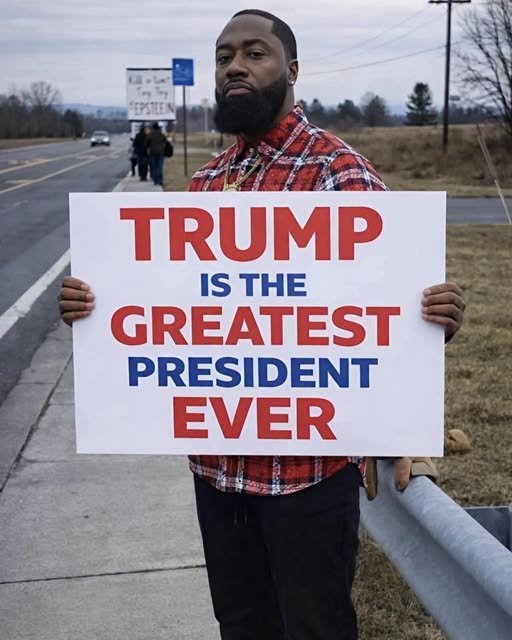
Trump’s the Greatest President: Why Supporters Say It
For millions of Americans, the presidency of Donald Trump represents a political movement that has transformed the country’s debate over immigration, government spending, energy, trade, national security and America’s role in the world. Supporters who describe Trump as the “greatest president” point to policies and accomplishments they believe represent a stronger and more assertive approach to governing.
Trump is serving as the 45th and 47th president of the United States, making him only the second president in American history to win two nonconsecutive terms. He first entered the White House in January 2017, left office in January 2021, and returned for a second term in January 2025.
One of the defining features of Trump’s political identity has been his emphasis on putting American interests first.
During his first administration, Trump signed the United States-Mexico-Canada Agreement, replacing NAFTA, pursued significant tax and regulatory changes, created the Space Force, appointed three Supreme Court justices and signed bipartisan criminal-justice legislation. The White House also points to reforms involving veterans and prescription-drug pricing among the accomplishments of his first term.
His supporters frequently point to immigration policy as another central reason for their support.
Trump campaigned in both presidential campaigns on strengthening the southern border and reducing illegal immigration. During his second administration, his White House has emphasized border enforcement as one of its highest priorities, describing the policy as part of a broader effort to increase national security and immigration enforcement.
Energy policy has also become a major part of the administration’s agenda.
The White House says the United States achieved record domestic oil and gas production in 2025 and record crude and petroleum-product exports in 2026. The administration has presented increased domestic energy production and deregulation as ways to strengthen American manufacturing and reduce dependence on foreign energy sources.
Economic policy is another area where supporters highlight the Trump administration’s approach.
The administration has promoted tax reductions, deregulation, domestic manufacturing and investment. The White House currently reports more than $11 trillion in announced U.S. and foreign investment commitments during Trump’s second term. It also cites strong employment, household income and GDP figures as evidence of economic progress. These are administration-reported figures, and individual economic indicators can have multiple causes beyond presidential policy.
Foreign policy is another major component of Trump’s presidency.
The administration describes its approach as “peace through strength,” emphasizing military power, negotiations and pressure on foreign governments. The White House currently lists several international conflicts and diplomatic initiatives among the administration’s accomplishments.
Trump’s supporters also point to his willingness to challenge established political institutions.
From his first campaign onward, Trump presented himself as an outsider willing to confront Washington’s political establishment. That approach helped him build a durable political movement and contributed to his historic return to the presidency after losing reelection in 2020.
His political career has also been marked by extraordinary controversy.
Trump was impeached twice by the House of Representatives during his first presidency. The first impeachment involved allegations concerning his dealings with Ukraine, while the second followed the January 6, 2021, attack on the U.S. Capitol and his efforts to challenge the 2020 election results. The Senate acquitted him in both trials.
Those events remain an important part of the historical record when evaluating his presidency.
Trump has also faced criminal legal proceedings. In 2024, a New York jury convicted him on 34 felony counts of falsifying business records. That case became an unprecedented part of presidential history because Trump became the first former U.S. president to be convicted of felony offenses.
His supporters have disputed many criticisms of his presidency and have argued that the legal cases against him reflected political motivations. Those claims have been strongly contested, making Trump’s relationship with the justice system another major part of the political debate surrounding his presidency.
Another defining characteristic is the strength of Trump’s connection with his supporters.
His political language is direct, often centered on themes such as national sovereignty, economic nationalism, border enforcement and opposition to what he describes as excessive government bureaucracy. The slogan “Make America Great Again” became one of the most recognizable political slogans in modern American politics.
The second Trump administration has continued that approach.
The White House says its current priorities include securing the border, growing the economy, strengthening national security, expanding American energy production and reducing federal regulations.
Whether those policies ultimately make Trump the “greatest” president is not something that can be established as an objective fact. Presidential reputations are shaped by values, political priorities and historical interpretation. Different Americans can examine the same events and reach very different conclusions.
For supporters, Trump’s record represents an aggressive effort to change the direction of the federal government.
For critics, many of the same policies raise concerns about executive power, immigration enforcement, institutional stability and the effects of his political style on American democracy.
That disagreement is part of Trump’s historical significance.
Few modern presidents have generated such intense political loyalty and opposition at the same time. His two nonconsecutive victories also place him in a rare category of American political history.
As his second term continues, historians and voters will have more information with which to evaluate its long-term consequences.
The final judgment of any presidency usually depends on more than campaign slogans or individual accomplishments. It involves economic conditions, legislation, foreign affairs, institutional changes, court decisions, social developments and events that may not become fully understood until years later.
For now, one fact is undeniable: Donald Trump has become one of the most consequential political figures in modern American history.
His supporters see his presidency as a restoration of American strength, sovereignty and confidence. His critics see his record through a very different lens.
The debate over Trump’s place in history will continue long after his second term ends.
And for the Americans who believe he is the greatest president, that belief is rooted in the policies, priorities and political movement they believe changed the country in a meaningful way.