Trump Proposes Bill to Prevent Future Presidents From Reversing Border Policies
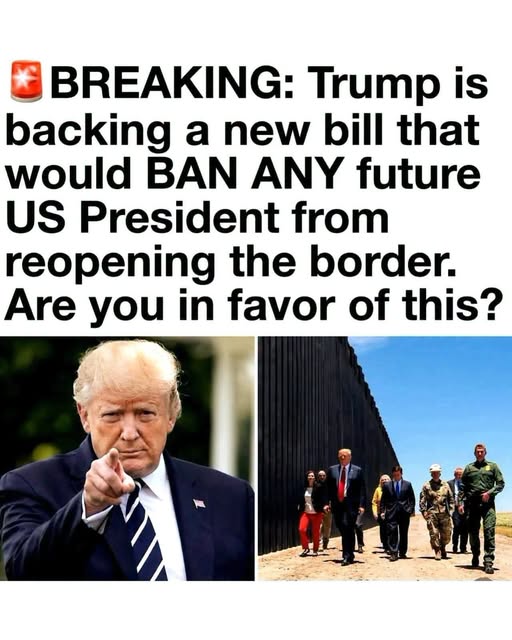
President Donald Trump has proposed a new piece of legislation that would attempt to make his administration’s border policies much harder for future presidents to reverse.
The proposal, announced during Trump’s speech at the Republican midterm convention in Dallas in September 2026, has quickly become a major topic of political discussion. Trump called the proposal the “No Invasion of Our Country Act” and said the goal would be to make it legally impossible for a future president to simply reverse his border policies through executive action.
The proposal has generated a straightforward question for Americans: Should Congress make Trump’s current border policies more difficult for future administrations to change?
The answer depends largely on how voters view immigration, presidential authority, border enforcement, asylum policy and the role of Congress in setting long-term immigration law.
It is important, however, to distinguish between what Trump proposed and what Congress has actually enacted.
Trump’s September announcement was a call for legislation. It was not itself a new law permanently preventing future presidents from changing border policy. Reports following his speech noted that specific legislative text for the proposed “No Invasion of Our Country Act” had not yet been publicly provided at the time of the announcement.
There are nevertheless separate congressional efforts already underway to codify portions of Trump’s immigration agenda.
One example is the Permanent Trump Secure Border Act. House Republicans introduced versions of that legislation in 2026, including H.R. 9199 and H.R. 9773. The bills contain numerous provisions dealing with border security, immigration enforcement, asylum, detention and related immigration policies.
H.R. 9773, for example, was introduced by Rep. Chip Roy on July 20, 2026, and referred to the House Judiciary and Foreign Affairs committees. According to the official congressional record, it remained legislation under consideration rather than enacted federal law.
That distinction is significant.
A president can ask Congress to pass legislation, but Congress must actually approve a bill before it becomes law. Depending on the proposal, legislation must pass both the House and Senate and then be signed by the president, unless Congress overrides a veto.
Trump’s broader objective is to move some immigration policies away from executive orders and administrative decisions and into federal statute.
The reasoning behind this strategy is that executive policies can be changed by subsequent administrations.
A future president could potentially reverse or modify policies established by an earlier president through new executive actions, agency regulations or changes in enforcement priorities, although the president’s authority is limited by existing statutes and the Constitution.
Trump and his congressional allies have argued that this makes long-term border security vulnerable to changes in presidential leadership.
During 2026, Republican lawmakers have repeatedly discussed the goal of codifying Trump’s border policies. The House Freedom Caucus, for example, pushed for legislation intended to ensure that border-security measures would survive beyond Trump’s presidency.
Supporters of such legislation argue that immigration policy should not swing dramatically whenever presidential administrations change.
They contend that Congress should establish durable rules through legislation rather than allowing major immigration policies to depend primarily on executive decisions.
The argument is particularly relevant because immigration policy has changed substantially between presidential administrations.
The Trump administration implemented aggressive border-enforcement policies during his first term. The Biden administration subsequently changed numerous immigration enforcement and border policies. Trump then returned to office in January 2025 and reversed or modified many of those policies.
The cycle demonstrates how presidential elections can produce significant changes in immigration enforcement without Congress necessarily rewriting every underlying immigration statute.
The proposed legislation is intended to address that problem from Trump’s perspective.
Critics, however, raise different concerns.
Some argue that Congress should not attempt to permanently lock in one administration’s approach to immigration. Immigration circumstances can change, they contend, and future presidents may need flexibility to respond to wars, humanitarian crises, economic conditions or changes in migration patterns.
There are also constitutional questions surrounding presidential authority.
The president is responsible for enforcing federal immigration laws, while Congress establishes the statutory framework governing immigration. The exact balance between congressional legislation and executive authority depends on the specific policy and the statutory authority involved.
A law could therefore restrict future executive discretion in some areas while leaving other presidential authorities intact.
That is why the phrase “ban any future president from reopening the border” can be misleading if interpreted literally.
The United States does not have a single legal switch labeled “open border” or “closed border.”
Immigration policy involves numerous separate authorities, including admission rules, asylum procedures, parole, detention, deportation, border processing, visas and enforcement priorities.
A future law could change some of those authorities without necessarily eliminating every power a future president possesses over immigration enforcement.
The exact effect would depend on the language Congress ultimately adopts.
Trump’s proposal also comes after Congress already approved substantial funding for his immigration-enforcement agenda.
In June 2026, Trump signed legislation providing nearly $70 billion for immigration enforcement through the remainder of his term, including approximately $38 billion for Immigration and Customs Enforcement and $26 billion for Border Patrol, according to reporting based on the legislation and administration statements.
That funding is separate from the proposed legislation intended to make portions of the administration’s border agenda more permanent.
The debate therefore involves both money and legal authority.
One side of the discussion focuses on whether the federal government should maintain strict border enforcement regardless of which party controls the White House.
Another focuses on whether future presidents should retain the ability to respond differently to changing circumstances.
There is also a question about the proper role of voters.
Presidential elections allow Americans to choose leaders with different approaches to immigration. If Congress permanently establishes a particular policy through federal law, future presidents may have less ability to change that policy without congressional action.
That could make immigration policy more stable, but it could also make major changes more dependent on the legislative process.
For voters, the details of the eventual legislation will therefore matter enormously.
If the proposal advances, Americans will be able to examine the actual text and determine which presidential authorities it would restrict, which immigration procedures it would change, and what exceptions would remain.
Until then, the most accurate description is that Trump has proposed legislation designed to prevent future presidents from easily reversing his border policies.
It is not accurate to say that a new law has already permanently banned future presidents from reopening the border.
The distinction between a proposal and enacted law is especially important in political discussions because headlines can make legislative proposals sound like completed policy.
The broader issue, however, is real.
Trump wants Congress to make his approach to border security more permanent, while opponents and other lawmakers are debating how much flexibility future administrations should retain.
As the 2026 midterm elections approach, immigration and border security are likely to remain major subjects of political debate.
For voters, the most useful question is not simply whether they support or oppose a headline. It is what the proposed law would actually do.
Would it restrict executive authority?
Would it change asylum rules?
Would it increase enforcement?
Would it establish permanent requirements?
Would it leave humanitarian exceptions?
And what powers would future presidents still retain?
Those answers will depend on the legislation Congress ultimately considers.
For now, the record shows that Trump has publicly called for a “No Invasion of Our Country Act” intended to prevent future presidents from reversing his border approach, while separate Republican-backed legislation seeking to codify elements of Trump’s border agenda has already been introduced in Congress.
Whether Americans support such legislation is ultimately a matter for each voter to decide after examining the actual proposal, its legal effects and the competing arguments surrounding it.