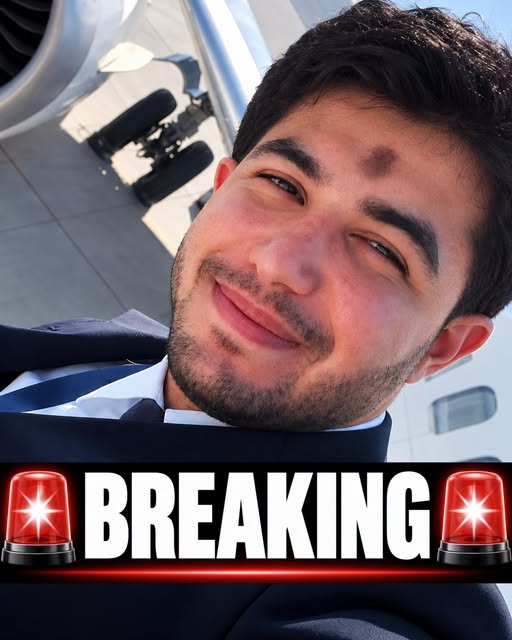
BREAKING: Flydubai Co-Pilot Had Reportedly Been Barred From Flying in Oman Over Extremism Concerns
A shocking new development has emerged in the investigation into the dramatic cockpit attack aboard Flydubai Flight FZ1073, raising serious questions about how the accused co-pilot was able to return to the cockpit of a commercial aircraft after reportedly being barred from flying in Oman.
According to multiple reports published October 3, the co-pilot, identified by several sources as Omani national Hamam al-Hammami, had previously been prohibited from flying in Oman because of concerns about alleged extremist views. The Wall Street Journal first reported the information, citing people familiar with the matter. Other outlets, including the Associated Press and Reuters, subsequently reported similar details.
The revelation comes only days after the extraordinary incident aboard Flydubai Flight FZ1073, which was traveling from Dubai to Tel Aviv with 182 people on board.
According to UAE authorities, the co-pilot allegedly attacked the captain inside the cockpit using the aircraft’s emergency crash axe and attempted to take control of the aircraft. The UAE attorney general described the incident as an attempted “terrorist attack,” while emphasizing that investigators are continuing to examine the circumstances, motive, connections, and physical and digital evidence.
The situation could have ended in catastrophe.
During the incident, the aircraft reportedly entered a steep descent, dropping more than 5,000 meters in roughly 30 seconds, according to flight-tracking information reported by ABC News. The injured captain managed to unlock the cockpit door, allowing other people aboard the aircraft to intervene. A reserve pilot then helped regain control, and the plane was diverted to Tabuk, Saudi Arabia, where it landed safely.
The captain, Smit Machchhar, was seriously injured during the confrontation but survived.
Now investigators face another major question: How did a person reportedly removed from flying duties in Oman because of security concerns later obtain a position that placed him in control of a passenger aircraft?
Reports indicate that the co-pilot had previously worked for Oman Air. According to sources cited by the Associated Press, he was reportedly barred from flying and moved into an administrative position because of concerns surrounding alleged extremist views. The sources did not publicly provide detailed information about the specific beliefs that prompted those concerns.
He was later hired by Flydubai.
It remains unclear exactly what information was available to Flydubai when the airline hired him, whether Oman formally communicated its concerns to the airline or other authorities, and what type of background screening was performed.
Those questions are now becoming a central part of the investigation.
The Associated Press reported that a Gulf diplomat said the co-pilot underwent standard security checks before being hired, but that those checks may have focused primarily on criminal history rather than deeper questions concerning possible radicalization. That claim has not been presented as a final finding, and investigators are still examining the circumstances surrounding his employment.
The investigation is therefore broader than the events inside the cockpit.
Authorities are examining the suspect’s background, possible motivations, digital evidence, and whether anyone else was involved. The UAE is leading the investigation, while officials from other countries are also participating.
The exact motive has not yet been publicly established.
That distinction is important because several political and security figures have made statements about alleged ideological radicalization, but investigators have not yet released a complete public explanation of what caused the attack or whether the suspect was acting alone.
Israeli Prime Minister Benjamin Netanyahu has previously said the suspect had undergone Islamist radical indoctrination and appeared to have intended to crash the aircraft. Investigators are also examining whether anyone else may have directed or assisted him. Those remain matters under investigation rather than established conclusions.
For passengers and aviation professionals, the case raises obvious concerns about cockpit security.
Commercial aviation relies heavily on layers of protection. Pilots undergo training, airlines conduct background checks, airports maintain security procedures, and governments establish rules governing who can operate aircraft. When an individual already known to authorities for alleged security concerns later gains access to a cockpit, investigators naturally want to understand where those safeguards may have failed.
But the investigation must answer those questions carefully.
It is not yet known whether Omani authorities formally shared their concerns with Flydubai, whether the concerns were based on verified evidence or intelligence, or exactly what information was considered when the co-pilot was hired.
Oman itself has not publicly provided a detailed explanation of the reports. Flydubai has also said that the circumstances remain under investigation and that it cannot provide further comment while authorities examine the incident.
The case has attracted enormous attention because the consequences could have been devastating.
A cockpit confrontation at cruising altitude leaves almost no room for error. The pilots are responsible for maintaining control of an aircraft carrying hundreds of people, and an attack against one pilot can immediately become a threat to everyone aboard.
In this case, the captain’s actions, the intervention of passengers and crew, and the presence of other trained pilots appear to have played important roles in preventing an even worse outcome.
The investigation will now determine exactly what happened, why it happened, and whether warning signs were missed.
Perhaps the most significant question is not simply how the attack occurred, but how the accused co-pilot reached that cockpit in the first place.
If reports about his previous flying restrictions in Oman are confirmed and investigators determine that relevant security information was not communicated between organizations, the case could lead to renewed discussion about international aviation background checks and information-sharing procedures.
For now, however, many details remain unresolved.
The UAE has formally characterized the incident as an attempted terrorist act. Authorities are still investigating the suspect’s motives and possible connections, while reports concerning his previous employment and alleged extremist views are being examined.
What is already clear is that Flight FZ1073 came dangerously close to disaster.
What remains to be determined is why.
And as investigators piece together the timeline—from the co-pilot’s earlier career in Oman, to his hiring by Flydubai, to the events inside the cockpit—the answers could have significant implications for aviation security far beyond this single flight.