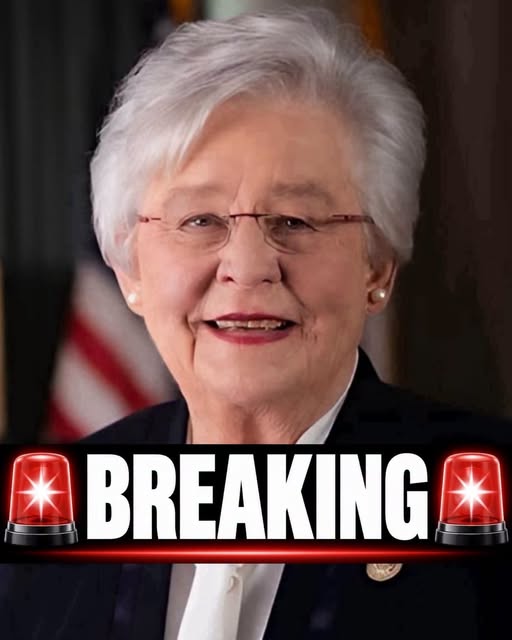
BREAKING: Alabama’s New Child Predator Death Penalty Law Takes Effect
A major change to Alabama’s criminal law is taking effect, putting the state at the center of a continuing national debate over the death penalty and punishment for crimes against children.
Governor Kay Ivey signed the Child Predator Death Penalty Act on February 12, 2026. The law took effect October 1 and makes certain serious sexual offenses against children under 12 capital offenses that can be punished by death. The covered offenses include first-degree rape, first-degree sodomy, and first-degree sexual assault involving a victim under the age of 12.
The law represents a significant change in Alabama’s criminal-justice system. Previously, the death penalty could generally be imposed only for crimes that fell within established capital-offense categories, most notably certain forms of murder. Under the new statute, Alabama has expanded the list to include specified sexual crimes against young children, even when the victim survives.
The legislation was sponsored by State Representative Matt Simpson and State Senator April Weaver. It received broad support in the Alabama Legislature before reaching Governor Ivey’s desk. The House approved the measure by a 73–6 vote, while the Senate approved it 33–1.
Supporters have described the legislation as a response to particularly serious crimes against children. Governor Ivey said the measure was intended to provide stronger legal protection for vulnerable children. Lawmakers supporting the bill have argued that people convicted of the most severe sexual crimes against young victims should face the maximum punishment available under state law.
The legislation also emerged after a highly publicized case in Bibb County. Alabama authorities announced in 2025 that multiple people had been arrested and charged in connection with allegations involving the sexual abuse and trafficking of children. Prosecutors said some of the alleged victims were extremely young. The case became part of the political discussion surrounding the proposed legislation.
However, Alabama’s new law immediately raises an important constitutional question.
In 2008, the United States Supreme Court ruled in Kennedy v. Louisiana that the death penalty is unconstitutional for the rape of a child when the crime does not result in the child’s death. The Court concluded that capital punishment was disproportionate for that category of offense under the Eighth Amendment.
As a result, the new Alabama law does not simply settle the question of whether child rape can legally result in an execution. Instead, it places the state in direct tension with existing Supreme Court precedent. Supporters of the Alabama legislation have openly acknowledged that constitutional litigation could follow.
The legal dispute could eventually require courts to determine whether the Supreme Court’s 2008 precedent remains controlling. Alabama lawmakers supporting the legislation have expressed an interest in creating a case that could give the Supreme Court an opportunity to reconsider the constitutional issue.
The distinction between a law being enacted and a law being enforceable in every circumstance is important. Alabama has now placed these offenses into its capital-offense framework, but defendants prosecuted under the statute can challenge the constitutionality of the punishment. Courts would then have to determine how the statute interacts with federal constitutional requirements and existing Supreme Court decisions.
The debate also includes arguments from opponents of capital punishment.
Critics have raised concerns about whether imposing the death penalty for child sexual offenses could create unintended consequences. In the 2008 Kennedy decision, the Supreme Court discussed concerns that a death sentence could discourage reporting or create an incentive for an offender to kill a victim rather than leave the victim alive.
Those arguments remain part of the broader national debate over the issue. Supporters, meanwhile, argue that the extraordinary harm caused by sexual violence against children justifies the harshest available punishment.
Alabama is not the only state considering or adopting laws challenging the existing legal framework. Several states have enacted legislation attempting to make certain sexual crimes against children punishable by death despite the 2008 Supreme Court ruling.
For Alabama families, the law is likely to be discussed primarily in terms of child protection and punishment. For legal scholars and criminal-justice officials, however, it represents something larger: a direct test of the relationship between state criminal laws and constitutional precedent established by the nation’s highest court.
The law also highlights the difference between political action and judicial review. Legislators can pass statutes and governors can sign them, but courts ultimately determine whether those statutes can be enforced when they conflict with the federal Constitution.
If an Alabama defendant is prosecuted under the new capital provisions and receives a death sentence, the case could generate extensive appeals. Questions could include whether the statute applies to the specific conduct involved, whether the evidence supports the conviction, whether constitutional protections were followed, and whether the death penalty itself is permissible under federal law.
For that reason, October 1 marks an important legal date, but it may not represent the final chapter.
The national conversation surrounding Alabama’s law also reflects a larger question about punishment. How should society respond to crimes that cause profound and lasting harm to children? Should the justice system emphasize punishment, deterrence, incapacitation, rehabilitation, or some combination of those goals? And where should constitutional limits be drawn when lawmakers seek the strongest possible penalties?
What is not in dispute is the basic fact that Alabama has enacted a new statute with unusually severe consequences for specified sexual offenses against children under 12. Governor Ivey signed it in February, and the law became effective October 1, 2026.
Its ultimate fate, however, may depend on the courts.
For now, Alabama has joined a growing group of states attempting to revisit the legal boundaries surrounding capital punishment for child sexual offenses. The issue is likely to remain closely watched by prosecutors, defense attorneys, victims’ advocates, lawmakers, and constitutional scholars.
The coming legal challenges could determine whether Alabama’s new death-penalty provisions remain enforceable, are narrowed by the courts, or eventually become part of a broader reconsideration of the Supreme Court’s existing precedent.
What began as a state legislative effort has therefore become part of a much larger national legal debate—one involving the protection of children, the punishment of convicted offenders, constitutional rights, and the limits of state power.
And with Alabama’s law now in effect, that debate has entered a new and watched stage.