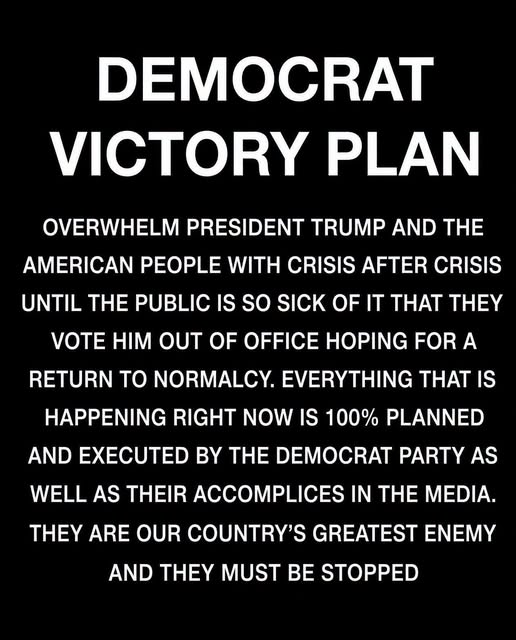
The Democrat Victory Plan: What the Party Is Doing Ahead of the 2026 Midterms
With the 2026 midterm elections approaching, Democrats have been building a campaign strategy centered on several themes: economic affordability, voter outreach, grassroots organizing, rebuilding trust, and competing in places where the party has struggled in recent elections.
The Democratic National Committee has publicly described its approach as a long-term effort rather than a strategy limited to the final weeks of an election. DNC Chair Ken Martin said the party needs to present voters with an affirmative agenda rather than relying primarily on opposition to President Donald Trump. He specifically highlighted affordability and issues affecting working families as areas Democrats are emphasizing.
One major component is direct contact with voters.
In February, the DNC announced its “Local Listeners” program, designed to reach more than one million infrequent voters during the early part of 2026. The program focused particularly on people who voted in 2020 but did not vote in 2024. The DNC said the effort would include phone conversations, grassroots events, voter registration, and volunteer training.
The party has also changed how it says it wants organizers to communicate with voters. Its 2026 organizing playbook emphasizes listening before asking for support, with organizers encouraged to have conversations rather than relying exclusively on traditional scripted campaign contacts. The playbook also calls for greater coordination among digital, coalition, and field operations.
Another part of the strategy is voter registration.
In March, the DNC announced a national voter-registration week featuring more than 100 events across 26 states. The organization described the initiative as part of an effort to close registration gaps and expand its electorate before the midterms.
Grassroots activity has continued throughout the election cycle. In July, the DNC announced 425 organizing events across 42 states and four territories as part of its “100 Days Out Weekend of Action.” The activities included canvassing, phone banking, voter-registration drives, volunteer training, and community events.
The party is also trying to address what its own leadership describes as a problem with its public image.
In a May statement accompanying the release of the DNC’s 2024 after-action report, Martin acknowledged concerns about the Democratic brand and argued that Democrats need to rebuild confidence among voters who feel ignored or disconnected from the party. He emphasized year-round organizing, stronger local campaigns, investment in state parties, and a broader national strategy.
That approach reflects an internal debate about how Democrats should appeal to working-class voters.
Different Democratic factions have proposed different ways to address concerns about household costs. Ideas discussed during the year have included reducing prescription-drug expenses, helping first-time homebuyers, and limiting childcare costs. The broader debate is about how Democrats can communicate economic priorities to voters who may not identify strongly with the party.
The party’s strategy also extends beyond traditionally competitive states.
In some heavily Republican states, Democratic organizations have experimented with supporting independent candidates rather than relying exclusively on Democratic nominees. The Associated Press reported that this approach has been used in places including Nebraska and Alaska, where some Democratic officials believe independent candidates could attract voters who might not support a candidate carrying the Democratic label.
That strategy has also generated disagreement within Democratic circles. Some party strategists argue that supporting independents can expand the coalition, while others contend that Democrats should instead invest in rebuilding their own party brand. The disagreement illustrates that there is not one universally accepted “Democrat victory plan.”
There are also broader political circumstances shaping the campaign.
A September AP-NORC poll found that voters were increasingly favorable toward Democrats on certain issues, including the cost of living and the economy, but the same survey found limited confidence in either major party’s ability to solve major problems. The poll was conducted among 2,140 U.S. adults from September 24 through September 28, 2026, ahead of the November 3 midterms.
That creates both an opportunity and a challenge for Democrats. Economic concerns may provide an opening for the party to emphasize affordability, but voters’ broader dissatisfaction with both parties means simply criticizing Republicans may not be enough to establish confidence.
Recent reporting has also described Democratic strategists debating how much emphasis should be placed on Trump himself versus a broader Democratic agenda. The party’s own leadership has explicitly argued that Democrats need a positive message rather than an identity based primarily on opposition to Trump.
Meanwhile, Republicans are developing their own strategy around President Trump and the GOP congressional agenda. Reuters reported in September that Trump was heavily involved in Republican midterm campaigning and that Republicans were attempting to maintain their congressional majorities.
The result is a campaign environment in which both parties are trying to define the election around issues they believe will motivate voters.
For Democrats, the publicly documented strategy includes several interconnected pieces: focus on affordability, maintain year-round organizing, reach infrequent voters earlier, expand voter registration, strengthen local organizations, communicate across multiple platforms, rebuild trust, and compete in states and districts that the party has previously considered difficult.
The party’s own materials also emphasize the importance of a long-term approach. Martin has argued that Democrats should think beyond a single election cycle by developing candidates, strengthening state legislatures, and building political infrastructure across the country.
Whether those efforts translate into electoral results will ultimately depend on voters, candidates, local races, turnout, campaign resources, and the issues that matter most in individual districts and states. Current polling can describe voter attitudes at a particular moment, but it cannot determine the final result.
For voters watching the campaign, the clearest way to understand the Democratic strategy is to look beyond slogans. The party is attempting to combine a message about everyday economic concerns with a more extensive organizing operation designed to maintain contact with voters throughout the election cycle.
The strategy is therefore not simply one television advertisement, one issue, or one candidate.
It is a combination of messaging, grassroots organization, voter registration, candidate recruitment, local campaigning, digital communication, and efforts to rebuild relationships with voters.
As Election Day approaches, Democrats will have to communicate that agenda to voters while Republicans present their own case for maintaining congressional control.
Ultimately, voters will decide how persuasive those competing arguments are.