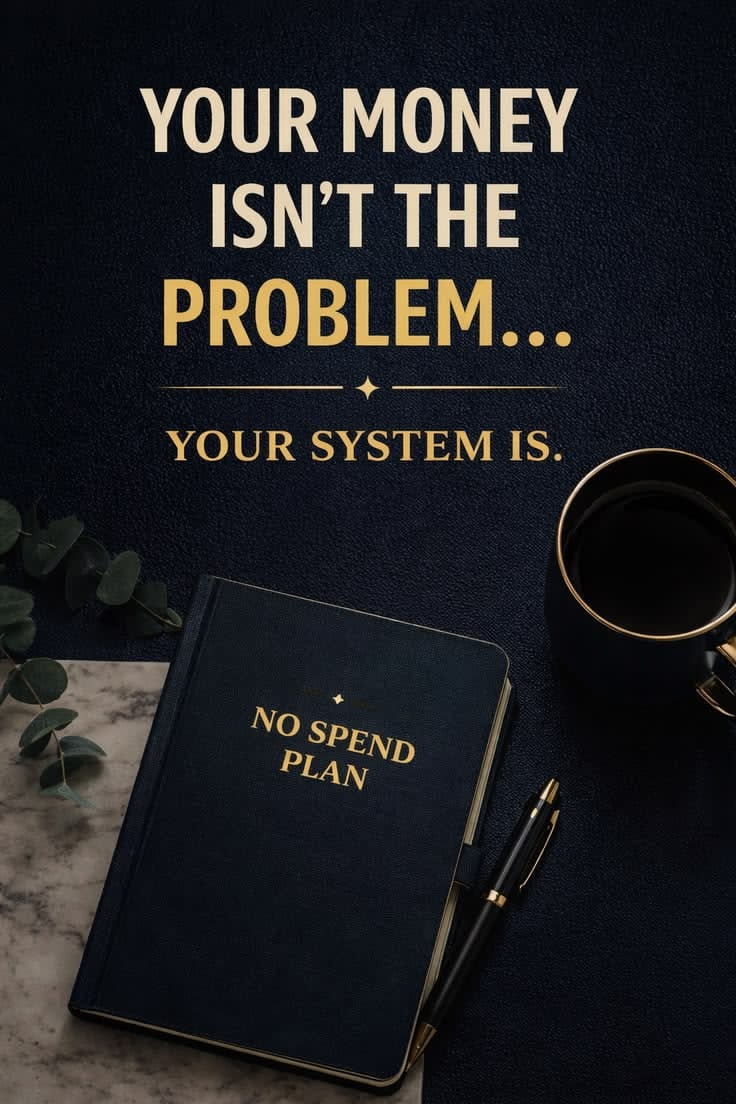
Your Money Isn’t the Problem: Your System Is
Many people believe they have a money problem.
They look at their bank account and think, “I simply don’t make enough.”
Sometimes that is true. Income matters. If your essential expenses are greater than what you earn, increasing income can be an important part of the solution.
But there is another problem that often gets overlooked:
The way money is managed can matter just as much as the amount of money coming in.
Two people can earn the same amount and end up in completely different financial situations. One may constantly feel stressed, while the other steadily builds savings and financial stability.
The difference isn’t always income.
Sometimes it’s the system.
A system is simply the structure you create for managing your money. It determines where your money goes, when bills are paid, how much is saved, what you spend, and how you prepare for unexpected expenses.
Without a system, money can disappear without you understanding where it went.
With a system, every dollar can have a purpose.
Stop Depending on Memory
One of the biggest mistakes people make with money is trying to manage everything in their heads.
They remember some bills.
They estimate some expenses.
They assume they’ll have enough for something later.
Then a payment arrives unexpectedly, and suddenly the budget feels impossible.
A financial system removes some of that uncertainty.
Write down your recurring expenses.
Know when bills are due.
Track subscriptions.
Understand your debt payments.
Know how much money comes in and when.
You don’t need an extremely complicated spreadsheet.
You need a clear picture.
When you know what is happening with your money, you can make better decisions.
Give Every Dollar a Job
Money without a plan tends to follow temptation.
You see something you want.
You buy it.
Then another expense appears.
Eventually, you wonder where the money went.
Instead of spending first and hoping there is enough left afterward, give your income a purpose before you spend it.
Think about categories such as:
Housing.
Food.
Transportation.
Utilities.
Debt payments.
Savings.
Investments.
Entertainment.
Personal spending.
The exact categories depend on your situation.
The important thing is knowing where your money is supposed to go.
A plan doesn’t mean you can never enjoy your money.
It means you enjoy it intentionally instead of accidentally.
Build an Emergency Fund
Unexpected expenses are part of life.
A car may need repairs.
An appliance may break.
A job situation may change.
A family expense may appear.
Without savings, an unexpected expense can turn into expensive debt.
An emergency fund provides a financial cushion.
You don’t have to build it overnight.
Start small.
Save consistently.
Even a modest amount can become meaningful over time.
The goal is not perfection.
The goal is creating a buffer between an unexpected problem and a financial crisis.
Automate Good Decisions
Willpower is unreliable.
Automation is often more dependable.
If possible, automate certain financial actions.
You might schedule savings shortly after receiving income.
You might automate regular bill payments.
You might automatically transfer money toward a specific financial goal.
The advantage is simple:
You don’t have to remember every time.
The system does part of the work for you.
When good financial decisions happen automatically, you are less likely to spend the money before saving it.
Watch the Small Leaks
Large purchases are easy to notice.
Small expenses can be much harder to recognize.
A subscription here.
A delivery order there.
A few unnecessary purchases during the week.
None of them seems significant by itself.
But repeated expenses can become substantial over a year.
This doesn’t mean you should eliminate every enjoyable purchase.
Instead, look for spending that doesn’t actually improve your life.
Ask yourself:
“Would I choose this expense again if I were reviewing my finances today?”
If the answer is no, consider changing the habit.
Increase Income When Necessary
A better system doesn’t mean income doesn’t matter.
If your essential expenses consume nearly everything you earn, budgeting alone may not solve the problem.
In that situation, increasing income can be an important strategy.
You might improve your professional skills.
Negotiate compensation where appropriate.
Take on additional work.
Start a small business.
Develop a valuable freelance skill.
Look for better opportunities.
The key is to combine income growth with financial discipline.
Making more money without changing the system can simply create more opportunities to spend.
Avoid Lifestyle Inflation
One of the easiest ways to lose the benefits of a higher income is to immediately increase your lifestyle.
You receive a raise.
Then you upgrade everything.
More expensive housing.
More expensive car.
More expensive restaurants.
More subscriptions.
More shopping.
Soon, the extra income disappears.
Instead, consider allowing some of your income increases to strengthen your financial foundation.
You can enjoy some of your progress while still increasing savings and reducing financial pressure.
More income should ideally create more options, not just more expenses.
Understand Your Debt
Debt isn’t automatically the same in every situation.
Different debts have different interest rates, terms, risks, and purposes.
The important thing is understanding what you owe.
Write down your balances.
Know the interest rates.
Know the minimum payments.
Know the due dates.
Then create a strategy for repayment.
High-interest debt can become particularly expensive when balances remain unpaid for long periods.
If debt feels overwhelming, consider speaking with a qualified financial professional or nonprofit credit counselor who can review your specific circumstances.
Create Financial Goals
A system becomes more powerful when it has a destination.
Instead of saying, “I want to save money,” create a specific objective.
Maybe you’re building an emergency fund.
Maybe you’re saving for education.
Maybe you’re preparing for a major purchase.
Maybe you want to become debt-free.
Maybe you’re investing for a long-term goal.
A specific goal gives your money a purpose.
When you know what you’re working toward, it becomes easier to say no to unnecessary spending.
Review Your System Regularly
A financial system isn’t something you create once and forget forever.
Your income can change.
Your expenses can change.
Your priorities can change.
Your family situation can change.
Your goals can change.
Set aside time regularly to review your finances.
Look at your spending.
Check your savings.
Review your debt.
Adjust your categories.
Update your goals.
The purpose isn’t to criticize yourself.
The purpose is to stay informed.
Don’t Chase Perfection
Some people create a detailed budget and then abandon it after one mistake.
They spend too much one week and decide the entire system has failed.
That’s unnecessary.
Financial progress doesn’t require perfection.
If you overspend, learn from it.
If you miss a savings goal, restart.
If an unexpected expense disrupts your plan, adjust it.
A good financial system should be flexible enough to survive real life.
The goal is not to control every penny perfectly.
The goal is to consistently make better decisions.
Your System Should Reduce Stress
Money management should ultimately give you more clarity.
You should know what is coming in.
You should know what is going out.
You should know what you are saving.
You should understand your obligations.
You should have a plan for unexpected expenses.
That knowledge can reduce financial anxiety because uncertainty is replaced with information.
You don’t have to become obsessed with money.
You simply need a system that works in the background.
Build Before You Need It
One of the best times to build financial habits is before a crisis happens.
Don’t wait until an emergency to start saving.
Don’t wait until debt becomes overwhelming to understand your payments.
Don’t wait until you lose income to think about financial resilience.
Preparation is powerful because it gives you choices.
You may not be able to predict every problem.
But you can prepare for some of them.
The Real Problem May Be the Process
Your money may not always be the enemy.
Your habits may simply need improvement.
If money comes in and immediately disappears, examine the system.
If bills constantly surprise you, create a calendar.
If savings never happen, automate them.
If debt keeps growing, create a repayment strategy.
If spending increases whenever income rises, establish boundaries.
If you don’t know where your money goes, track it.
The answer isn’t always “make more.”
Sometimes the answer is “manage differently.”
Build a System That Supports Your Future
Money is a tool.
Used intentionally, it can help create stability, opportunity, and freedom.
But money needs direction.
Your system provides that direction.
Create a plan.
Track your spending.
Automate important habits.
Build savings.
Understand your debt.
Increase your income when necessary.
Avoid unnecessary lifestyle inflation.
Set clear goals.
Review your progress.
And give yourself room to make mistakes and learn.
The goal isn’t to become perfect with money.
The goal is to become intentional.
Because when your financial system improves, your relationship with money can change too.
You stop wondering where everything went.
You start deciding where it should go.
You stop reacting to every expense.
You start preparing for them.
You stop thinking only about today.
You begin building for tomorrow.
Your money may not be the entire problem. Sometimes the real opportunity is to build a better system around it.
Start small.
Create structure.
Stay consistent.
Let your system do the heavy lifting.
And over time, the small financial decisions you make today can become the foundation for a more stable and flexible future.