REVERSAL: Trump Announces Major Change Involving the U.S. Military
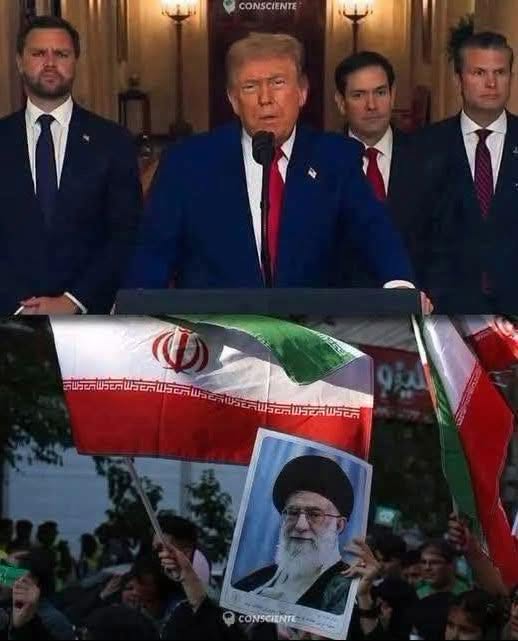
A major shift involving the U.S. military is drawing renewed attention as the Trump administration faces difficult decisions about America’s role overseas. The development comes as the United States continues to deal with a prolonged conflict involving Iran, growing pressure from Congress and questions about how American forces should be positioned across the Middle East.
One of the most significant developments is the planned end of the U.S. military presence in Iraq. Iraqi officials said in July that American forces would leave Iraq by the end of September 2026, concluding a military presence that began with the 2003 invasion.
The change comes at a particularly complicated moment for U.S. foreign policy.
American forces remain involved in a broader regional security environment, while the Trump administration is simultaneously facing congressional efforts to restrict presidential authority over military operations in Iran.
On September 15, the U.S. House of Representatives voted for the third time on a war-powers resolution intended to limit President Donald Trump’s ability to continue military operations in Iran without additional congressional authorization. The measure passed 220-204, although it still faces major obstacles before becoming law.
The House vote illustrates the growing political debate surrounding the administration’s military strategy.
Supporters of continued operations argue that the United States must maintain pressure on Iran and protect American personnel and interests in the region. Critics in Congress have argued that major military operations should require clearer congressional authorization and oversight.
Against that backdrop, the reduction of U.S. forces in Iraq represents another important development.
The American presence in Iraq has undergone several changes since the invasion more than two decades ago. U.S. forces eventually returned in the fight against the Islamic State after the militant organization captured large areas of Iraq and Syria. Over time, the mission evolved from large-scale combat operations into security cooperation, training and counterterrorism support.
The planned withdrawal therefore does not simply represent the end of a single military campaign. It marks another stage in the long evolution of America’s relationship with Iraq.
The timing is particularly notable because the United States is simultaneously dealing with military demands elsewhere.
Reports this week indicate that U.S. forces have been using substantial quantities of missile-interceptor systems to defend American personnel and facilities against Iranian attacks. The Wall Street Journal reported that the United States has used more than 70 Patriot and THAAD interceptors in response to a recent Iranian missile attack targeting American forces in Jordan.
Those developments have raised questions about military resources and the ability of the United States to sustain operations across several regions simultaneously.
The challenge is not limited to ammunition.
American commanders must also consider personnel, logistics, bases, aircraft, naval forces, air defenses and the ability to respond to unexpected crises.
At the same time, the administration is making decisions about where American military assistance should be concentrated.
The Associated Press reported this week that the Trump administration has announced the reallocation of $52 million in U.S. military aid from several European and Middle Eastern countries to nations in Central and South America, including Panama, Peru, Ecuador and Colombia. The administration has described the shift as part of a greater emphasis on the Western Hemisphere, including efforts related to drug trafficking and regional security.
Taken together, these developments suggest that U.S. military policy is undergoing significant changes.
However, it is important not to interpret every military adjustment as a complete withdrawal from the world.
The United States continues to maintain extensive military commitments and alliances. American forces remain active in multiple regions, and Washington continues to cooperate with allies on intelligence, defense and security matters.
The situation in the Middle East also remains fluid.
The Guardian reported on September 16 that U.S. officials recently met with Houthi leaders in Muscat, Oman, and that Washington decided against providing military support to Saudi Arabia in its effort to repel a Houthi advance in Yemen. The development came while the Trump administration was dealing with the broader conflict involving Iran.
Separately, senior military commanders from the United States, Israel and eight Arab countries reportedly held a private meeting in Germany to discuss the Iran conflict and broader regional security concerns.
These developments show why the question of U.S. military involvement cannot be reduced to a single announcement.
A decision to withdraw troops from one country does not necessarily mean that the United States is abandoning the region. Military strategy can involve moving personnel and resources from one location to another, changing missions or relying more heavily on regional partners.
For Iraq, the end of the American military presence would represent a historic moment.
The U.S. invasion in 2003 fundamentally changed Iraq and reshaped American foreign policy for years. The conflict resulted in enormous human, political and financial consequences, followed by years of instability and the rise of extremist groups.
More than two decades later, the planned departure of U.S. forces demonstrates how dramatically the relationship has changed.
The Iraqi government has increasingly sought to assume greater responsibility for its own security. American officials have also argued that Iraqi security forces are better equipped than they were in the years immediately following the invasion.
Nevertheless, the withdrawal comes with risks.
Regional security conditions can change quickly. The continuing conflict involving Iran, attacks by armed groups and instability around major transportation routes mean that American policymakers must consider what could happen after troops leave.
A military withdrawal can reduce exposure for American personnel, but it can also reduce the immediate ability to respond from nearby bases.
That is why the details surrounding the withdrawal matter.
The number of troops involved, the timeline, the remaining diplomatic relationship and the ability of Iraqi forces to respond independently will all influence what happens next.
Meanwhile, the debate in Washington is likely to continue.
The House vote on September 15 demonstrates that questions about presidential war powers remain highly contentious. Lawmakers are debating not only the immediate conflict with Iran but also the broader constitutional relationship between Congress and the president when American troops are sent into combat.
For Americans watching these developments, the biggest question may be what the administration’s broader military strategy will look like over the coming months.
Will the United States reduce its overseas commitments?
Will forces be redirected toward other regions?
Will Washington rely more heavily on allies and regional partners?
Or will continuing security threats require American troops and military assets to remain heavily engaged?
Those questions remain open.
What is clear is that the U.S. military is entering another period of adjustment.
The planned departure from Iraq, the continuing conflict with Iran, changing military assistance priorities and congressional efforts to constrain presidential war powers are all happening at the same time.
That makes the latest developments more significant than a single headline might suggest.
The phrase “reversal” can be tempting when describing a major policy change, but the facts are more complicated. Military policy rarely moves in only one direction. Governments can withdraw troops from one location while increasing activity somewhere else.
The most important issue is therefore not simply whether the United States is “leaving” or “staying.”
It is understanding where American forces are being deployed, what missions they have, what risks they face and what authority governs those operations.
As September progresses, attention will remain focused on Iraq, Iran and the broader Middle East. The decisions made now could shape American military policy for years to come.
For the moment, the planned end of the U.S. military presence in Iraq is one of the clearest signs that a major chapter in America’s post-2003 military involvement is approaching its conclusion.
But it is not necessarily the end of America’s military role overseas.
Instead, it may represent another transition—one that could redefine where American forces are stationed, how they are used and what responsibilities the United States expects its allies and partners to assume in the future.